
Written by Louise Conesa
With an artist mother and an architect father, Elena Rocabert grew up at the crossroads of disciplines. For this Madrilenian, choosing is not an option. Trained in architecture, she reinvents its uses: « For me, it’s a tool that allows me to design projects by crossing disciplines. » She sharpens her artistic vision in the studios of Tomas Saraceno and Olafur Eliasson. There, Rocabert grasps the importance of space in storytelling and the convergence of the arts. A meeting with an architect of chance.

While some leave nothing to chance, Elena plays with it. She lets herself be guided by curiosity and experimentation. This is how her creations emerge, like a phenomenon of serendipity, a happy accident that leads to unexpected discoveries. Each project is unpredictable yet connected through a reflection on space and the cycle of life.

© Rebeca Sayago
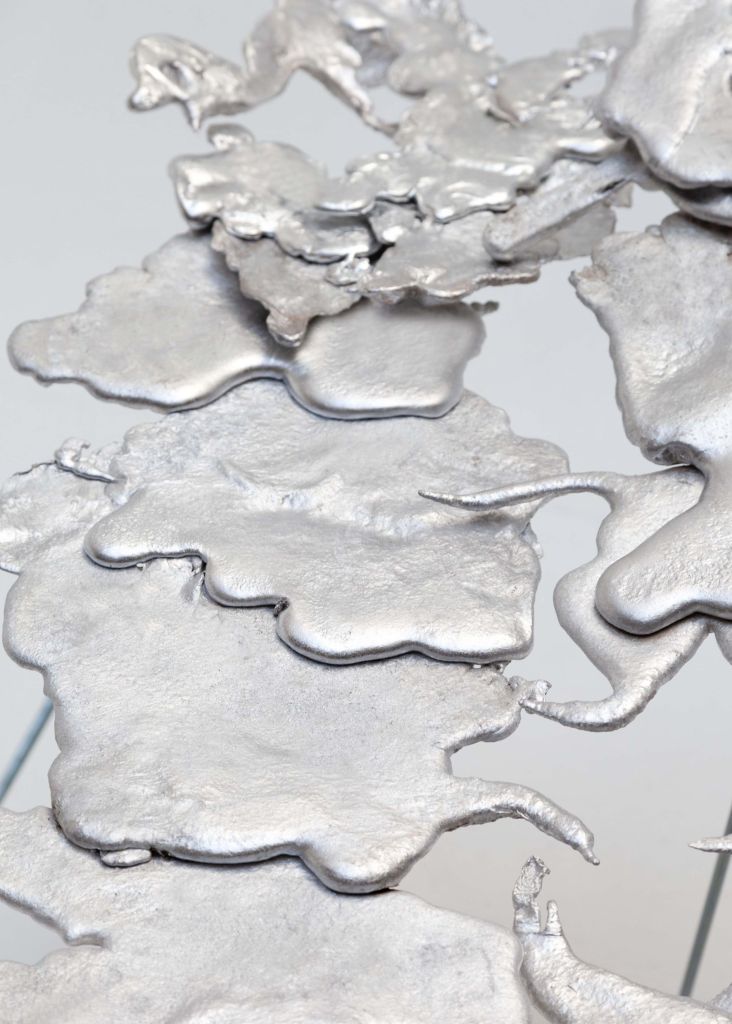
Fascinated by aluminum, Elena explores its transformation in a molten state. During the creation of Transient Terrain, a table made from recycled aluminum, she lets go of control and allows the material to determine its own shape. Each pour creates a metallic landscape. But beyond aesthetics, it is the paradox of the material’s cycle that intrigues her. Abandoned, melted, reused, it symbolizes destruction and rebirth, showcasing its versatility. Indeed, this experimental piece later reinvents itself as a central scenographic element for a runway show by the brand Evade House.
© Rebeca Sayago
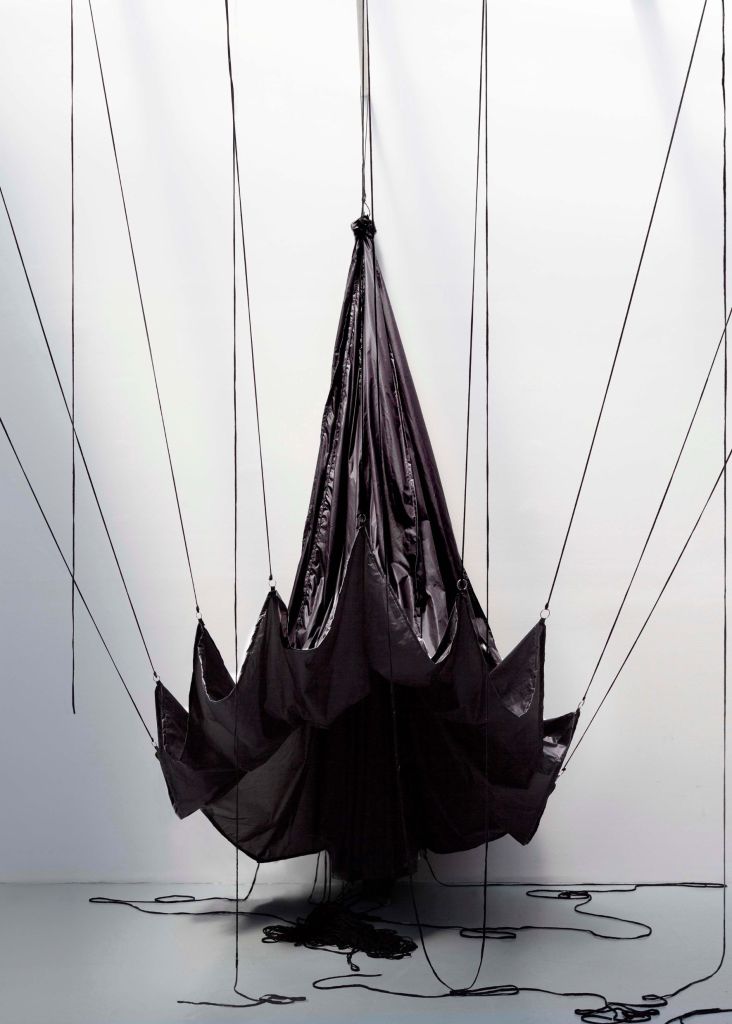
Elena is committed to developing this idea across different aspects and disciplines. Recently, she adapted a work born from an artist residency with textile designer Ellen Nessa. Originally, this hand-woven wire veil questioned cultural stereotypes. Both brutal and delicate, the piece found a second life on stage. It became a moving set for Mar Aguiló’s dance performance Swans, simultaneously expressing the dancers’ lightness and the rigor of their discipline. This transition from one medium to another reveals the richness of Elena’s creative process, where each project feeds into the next.
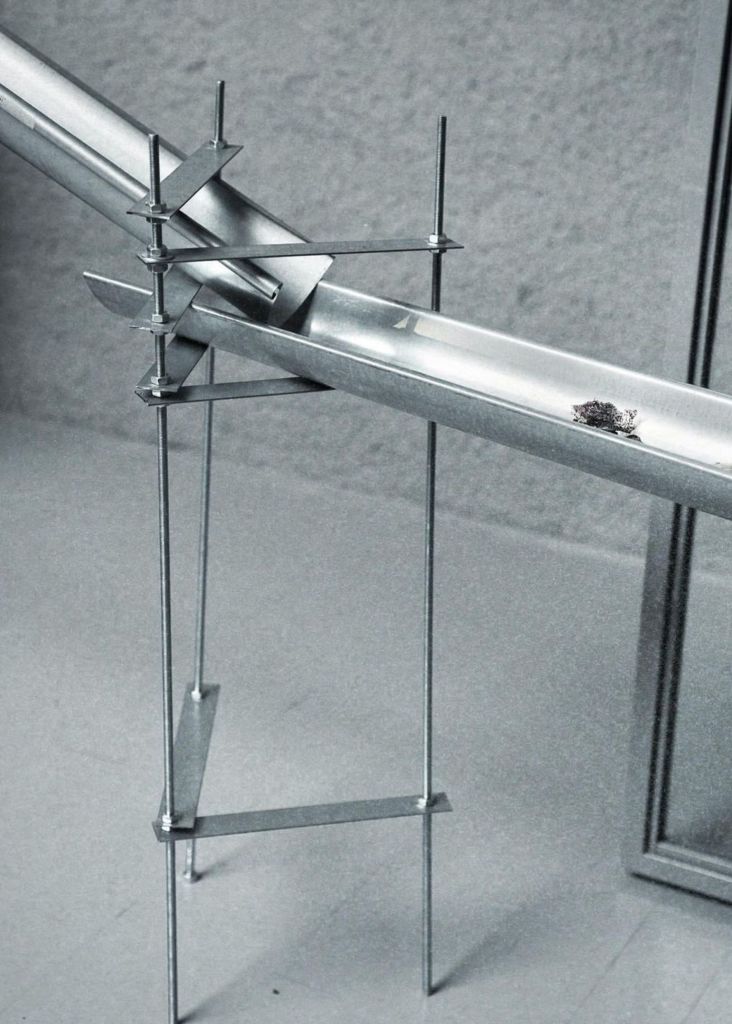
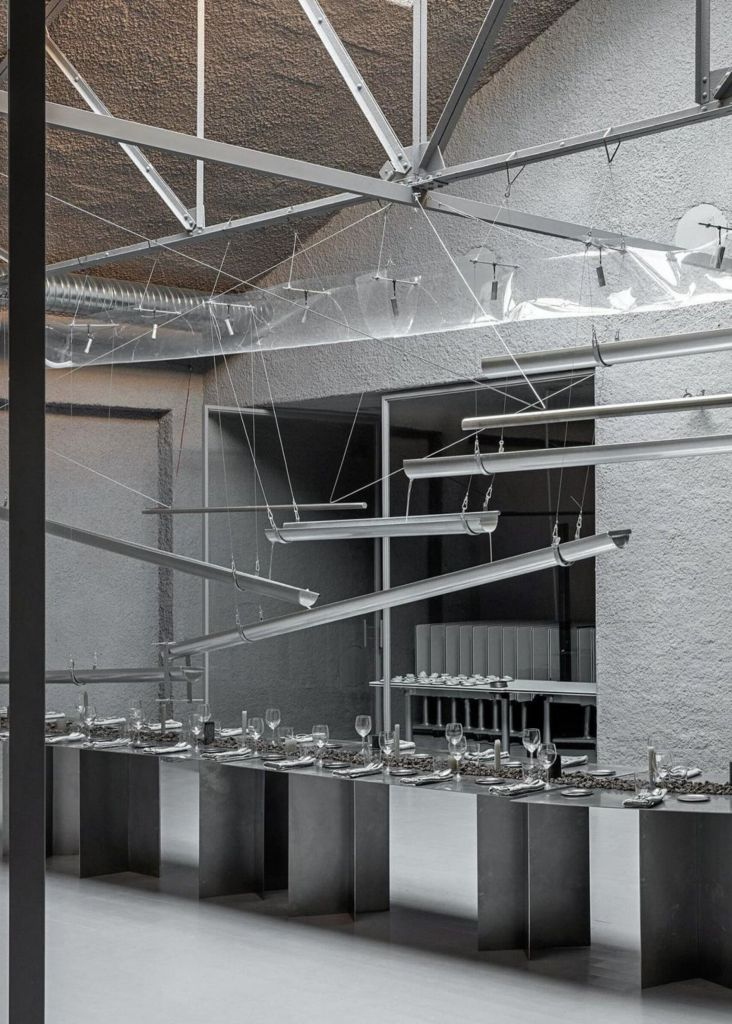
What sets Elena apart is her ability to incorporate the notion of cycles into often unexpected fields. With Floating River, she engages with the culinary world. During the Mayrit Biennale in Madrid, she conceived this installation for the ephemeral dinner hosted by the Fondo studio. Under the theme of water, her challenge was to create a connection between the meal and the space.

In her research, one idea stood out: highlighting water pipes, an often-invisible element of our daily lives. Combining aluminum, galvanized steel, and transparent PVC, she created a circular structure above the table, where water flows, sometimes overflows, and spills onto the table. Water becomes the protagonist, weaving a connection between art, space, and the guests.
For Elena Rocabert, every material and every discipline is a new adventure. But after exploring unexpected territories, she returns to a more personal practice: painting. A new series will soon emerge, perhaps as part of another project. A serendipitous journey to follow.
© Asier Rua
 lateral