
Written by Aurore De Granier
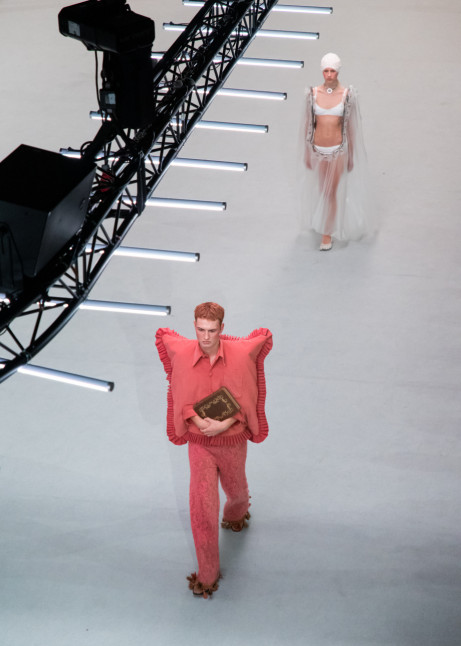
At the end of any academic journey, facing the realities of the professional world represents a decisive step. At HEAD – Geneva University of Art and Design – students in Fashion and Accessory Design showcase their collections as a first gesture to the world. It’s an opportunity to take the pulse of contemporary creativity and to grasp the challenges these young designers are up against. A look behind the scenes at the realities of fashion in the making.
It’s a ritual that repeats every fall. Each November, the Cube on the HEAD campus in Geneva draws around 2,000 spectators—journalists, critics, curious onlookers, and fashion enthusiasts alike—for the graduate fashion show of this school, now one of the most sought-after in Europe. A reputation built in just 20 years, with the Geneva institution attracting students from all over the world. What’s behind this success? Clearly, the resources invested in the school, which has relocated to an impressive campus since its founding. But that’s not all. At HEAD, they aim to change the world. Well, almost. Watching the student shows of recent years, it’s become hard to see their creations as just simple clothes.
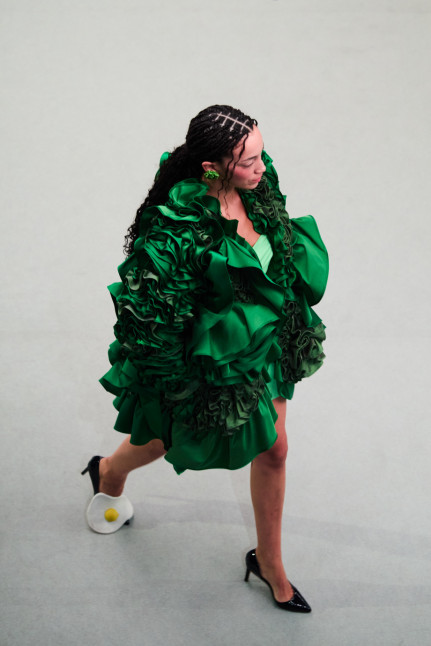
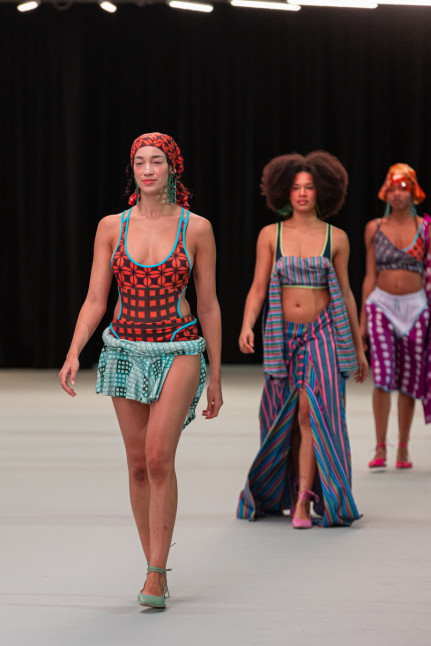
©HEAD — Genève, Raphael Lugassy
Carrying a range of messages—from environmental awareness to feminism, and from queer questioning to beyond—at HEAD, students learn to sew both fabric and ideas. The program sets no limits, giving young creators free rein to let their imaginations run wild. It’s a fertile ground that has nurtured designers like Kevin Germanier, Victoria Davies, Lora Sonney, and more recently Alan Clerc. What unites them? Boldness, stemming from a free-spirited creative approach where fashion often becomes more a playground than reality.
From Academic Fairy Tale to Market Reality
A creative drive among the soon-to-be graduates that raises questions about their creative experience and the challenges they face—first in the academic setting, then in the realities of the fashion market. Marie Boutin was also among the designers featured in this 17th edition. Her collection Superlike earned her the ASWE Master Award (Association of Swiss Women and Empowerment), recognizing her exploration of the dynamics of desire in a world dominated by social media, while also celebrating her sculptural cuts and keen attention to detail.

Fashion show 2024 ©HEAD — Genève
A powerful collection, notably marked by the “MB Corset,” giving ultra-femininity back to those who deserve it, far from patriarchal norms. “This collection tells the story of a woman who stopped chasing love and rides away on a motorcycle. I drew inspiration from technical garments, which I deconstructed and reworked. For example, this corset was born from the back protectors found in jackets. I was also inspired by 2000s pop culture and its rom-coms, which brought a softer side to the collection. It’s kind of a clash between these two worlds,” explains the young designer.
A collection that, for Marie and her peers, embodied five years of study at the Geneva institution. Five years of endless possibilities, at a school that aims to give its students a comprehensive education in the world of fashion, far from the constraints of the professional industry.
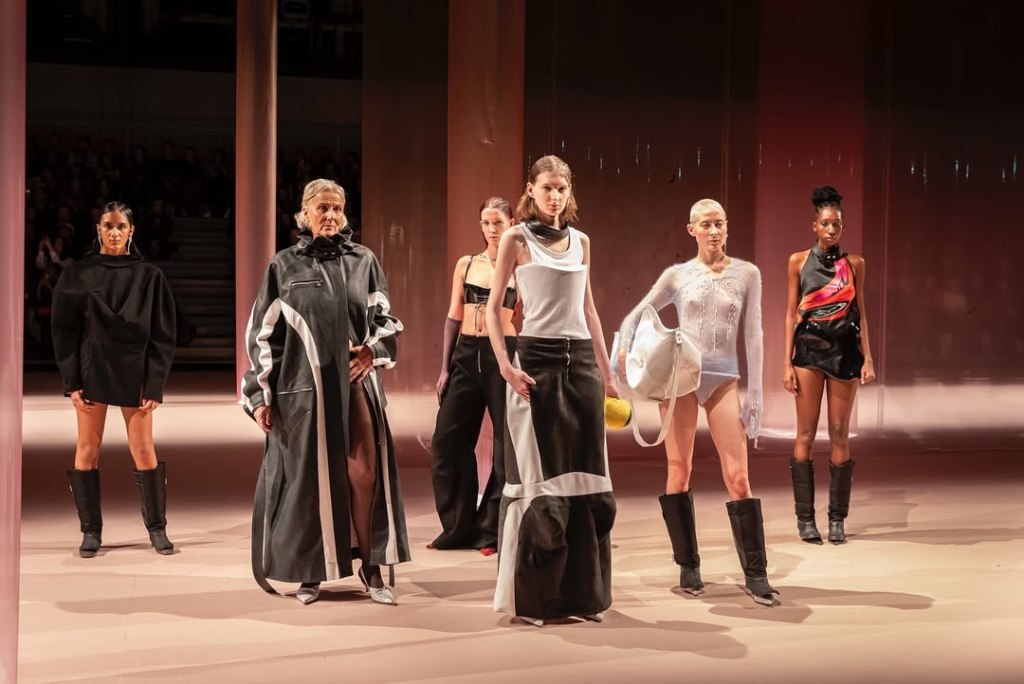
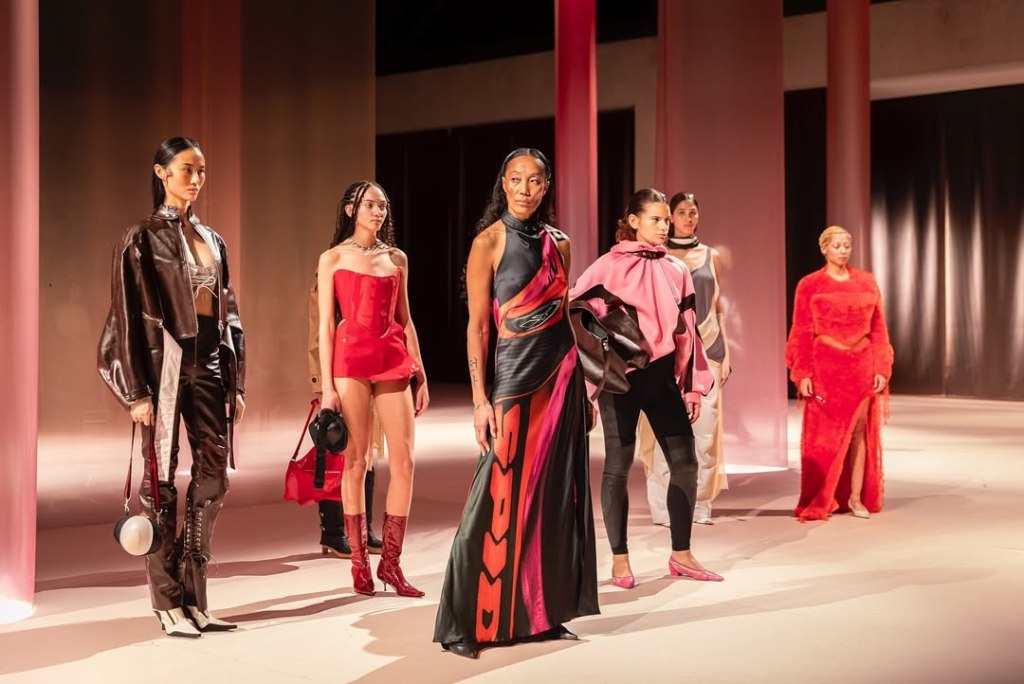
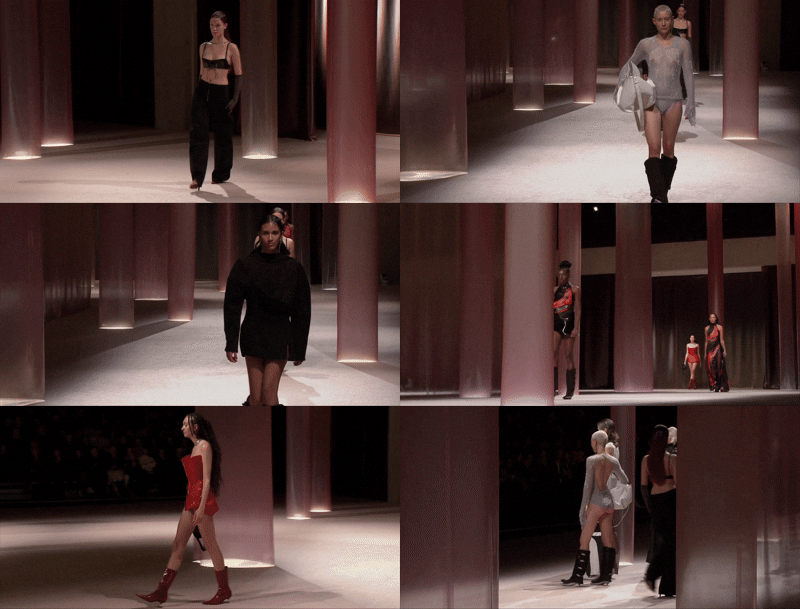
Fashion show 2024 ©HEAD — Genève / Raphael Lugassy
“HEAD is an excellent fashion school. We have a lot of resources at our disposal, a lot of freedom, and access to literally everything. It’s an exceptional and very healthy creative environment, where students aren’t competing but helping each other every day. In terms of classes, the school teaches us all the techniques, from working with leather to knitwear and dyeing. There’s plenty of room for our creativity, but it’s always grounded in a very solid technical know-how,” Marie explains. A creative cocoon that has made this Swiss institution one of the most sought-after in Europe today.
However, this idyllic setting keeps students far from the realities of the fashion market. An institutional world that Marie Boutin compares to the closed-off universe of the Care Bears. Indeed, once their diploma is in hand, designers face the harsh reality of a market flooded with young talent, all dreaming of launching their own brands. While this dream still lingers in the minds of many fresh HEAD graduates, it becomes reality for only a very few, like Jeremy Currat.
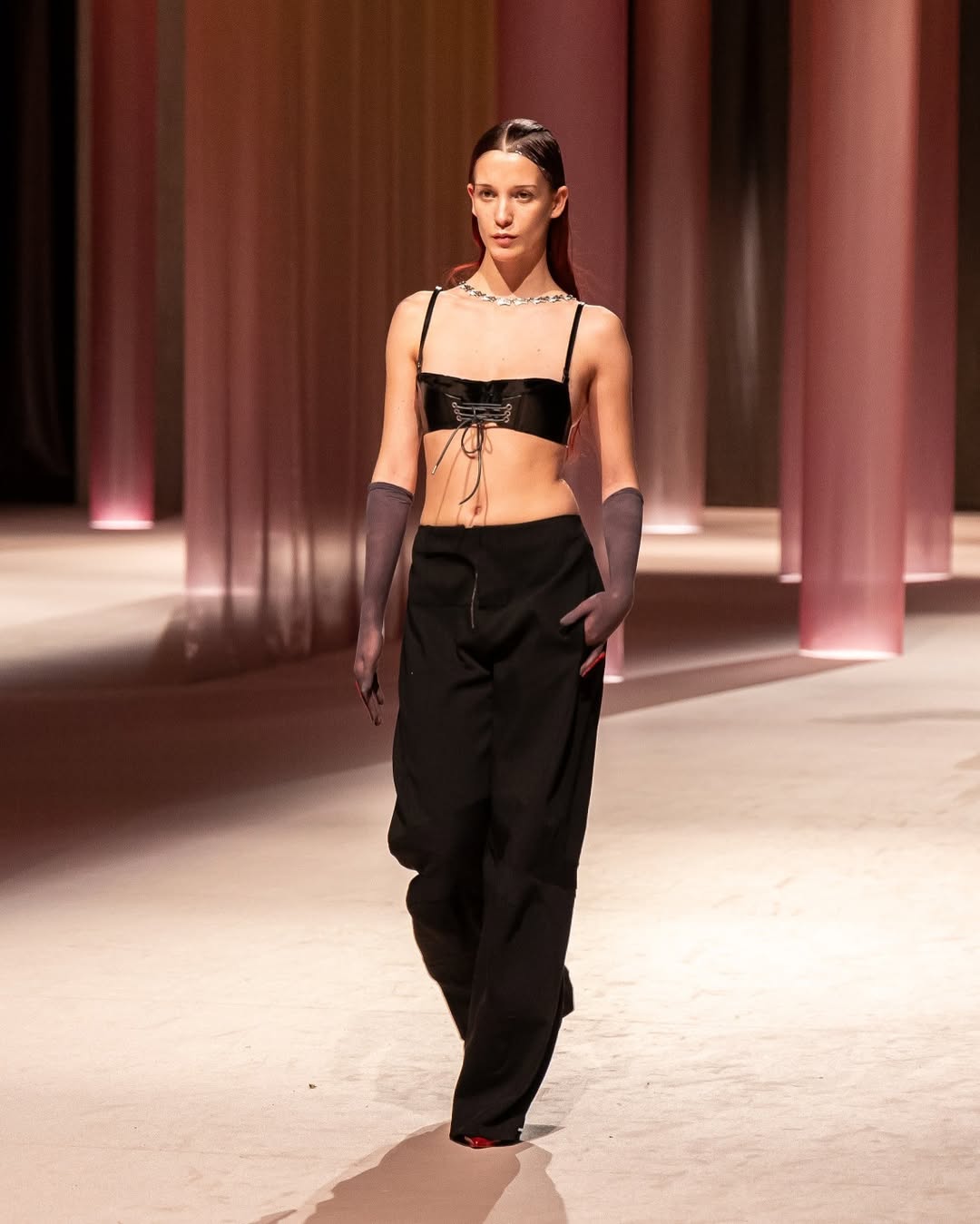
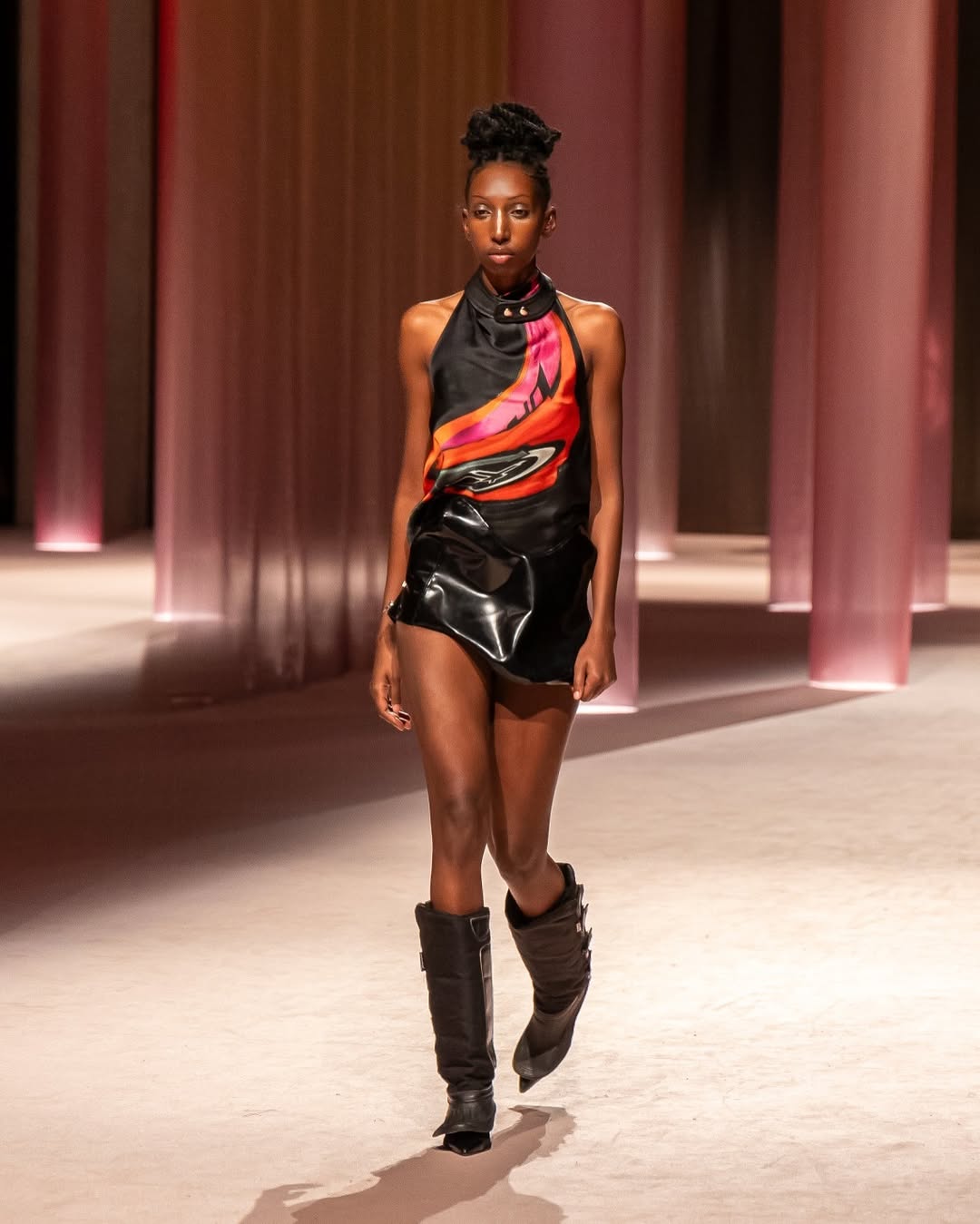
Fashion show 2024 ©HEAD — Genève / Raphael Lugassy
“I quickly realized that launching your own brand is very complicated. There are so many things to manage, and the creative side is only about 10% of the job. I had to come back down to earth and face a reality: brands are born every day, and young designers all have the same limited resources, which leads to pieces that end up looking alike. I didn’t want to get lost in the crowd. For now, I’m putting this dream aside. By working hard, I hope to launch my own label in about ten years. You quickly realize that fashion isn’t as simple as social media makes it seem,” Marie shares.
A Still Unequal World
The solution for these young designers is often the same: find a job at an established fashion house, often starting with an internship, and remain at a distance from the creative act itself. It’s the first compromise on the common dream of every young designer—seeing their name on a label—and for 50% of them, it comes with another harsh reality: gender inequality in fashion. While HEAD’s classrooms have an equal number of male and female students, once they enter the job market, a gap opens up between the genders.
“I don’t know if it’s a coincidence, but after graduation, two of my male classmates found positions within a few weeks. Myself and the other women in my class are still looking. The idea of creative genius with a man at the head of a fashion house is still very much present. Just look at the current creative directors of the major houses. Yes, women win awards, but in the meantime, they often remain stuck in designer positions. Like everywhere else, we always have to fight that much harder.”
©HEAD — Genève, Raphael Lugassy
 lateral